Melasma treatment in Seoul
gentle, long-term clarity
Melasma is a chronic pigmentation condition that causes brown or grey-brown patches, usually on the cheeks, forehead and upper lip. It is driven by sun, heat, hormones and inflammation, so it is managed with gentle, consistent treatment rather than aggressive lasers.
Last updated

What is the most effective treatment for melasma?
Melasma usually responds best to a combination: low-fluence laser toning in a series of sessions (often 5–10, spaced 1–2 weeks apart), barrier-strengthening boosters such as Rejuran, and strict daily sun protection. Light chemical peels can help surface pigment. Improvement is gradual over weeks to months, and because melasma is chronic, maintenance and SPF help keep it from returning. Aggressive, high-heat lasers are avoided because they can worsen it.
Understanding a stubborn pigment
Melasma is not just extra pigment — it reflects overactive pigment cells, inflammation and sometimes blood-vessel changes, which is why it tends to recur.
Sun & visible light
UV and even visible light switch pigment cells on; brief unprotected exposure can undo weeks of progress.
Hormonal triggers
Pregnancy, birth control pills and hormone therapy commonly trigger or worsen melasma.
Heat & inflammation
Saunas, hot yoga, harsh scrubs and over-aggressive lasers can provoke rebound darkening.
Skin type & genetics
It is more common in women and in medium to darker skin tones, including many Asian skin types.
How we treat melasma
Your doctor tailors the combination to melasma depth and skin sensitivity:
- Low-fluence laser toning – gradual pigment reduction with minimal heat; see our laser treatments
- LaseMD / meso laser delivery – helps brightening serums absorb with little downtime
- Rejuran or PN boosters – strengthen the barrier and calm inflammation
- Brightening skin boosters – improve hydration, radiance and evenness
- Mild chemical peels – gentle exfoliation for surface pigment
- Home care plan – daily broad-spectrum sunscreen, tinted protection and a brightening routine
A clearer, more even tone

What to expect at your visit
Skin analysis
We examine the pattern and depth of pigment and review triggers such as hormones, sun habits and skincare.
Personal plan
Your doctor combines laser, boosters and home care, and explains the number of sessions and costs up front.
Gentle sessions
Treatments are spaced at safe intervals; mild redness typically fades within hours.
Maintain & protect
Improvement builds over weeks to months; ongoing sun protection and occasional maintenance help keep it controlled.
Who is a good candidate?
Aftercare & daily habits
- Wear broad-spectrum SPF 50 every day and reapply outdoors
- Use a hat and tinted sunscreen to block visible light
- Avoid saunas, hot yoga and facial scrubbing
- Use gentle, fragrance-free skincare and keep the barrier hydrated
- Discuss hormone-related triggers with your doctor
Melasma questions, answered
Can melasma be cured completely?
Melasma is a chronic condition, so it can be significantly lightened and controlled but may return with sun, heat or hormonal changes. Ongoing sun protection and maintenance are part of good management.
Is laser safe for melasma?
Gentle, low-fluence laser toning is commonly used and suits many skin types. High-heat or aggressive lasers can trigger rebound darkening, which is why we avoid them for melasma.
How many laser toning sessions do I need for melasma?
Many patients have a series of around 5–10 sessions spaced 1–2 weeks apart, but this varies with depth and response. Your doctor will review progress and adjust.
What is the difference between melasma and hyperpigmentation?
Melasma is one type of hyperpigmentation, typically in symmetrical patches linked to hormones and sun. Other types, like sun spots or post-acne marks, behave differently and may need different treatment.
Can I treat melasma while pregnant or breastfeeding?
Most active treatments are postponed during pregnancy. Strict sun protection is the safest step; your doctor can advise on gentle options after delivery or breastfeeding.
How do I book a melasma consultation in Seoul?
Send us a WhatsApp message at +82-10-6396-5671. We reply in English with availability and a VAT-inclusive quote, and you can visit us near Seonjeongneung Station in Gangnam.
Related treatments & guides
Plan your melasma treatment in Gangnam
English-speaking consultations, transparent VAT-inclusive pricing and a doctor-led plan for every patient. Message us on WhatsApp for availability and a quote.
- Address
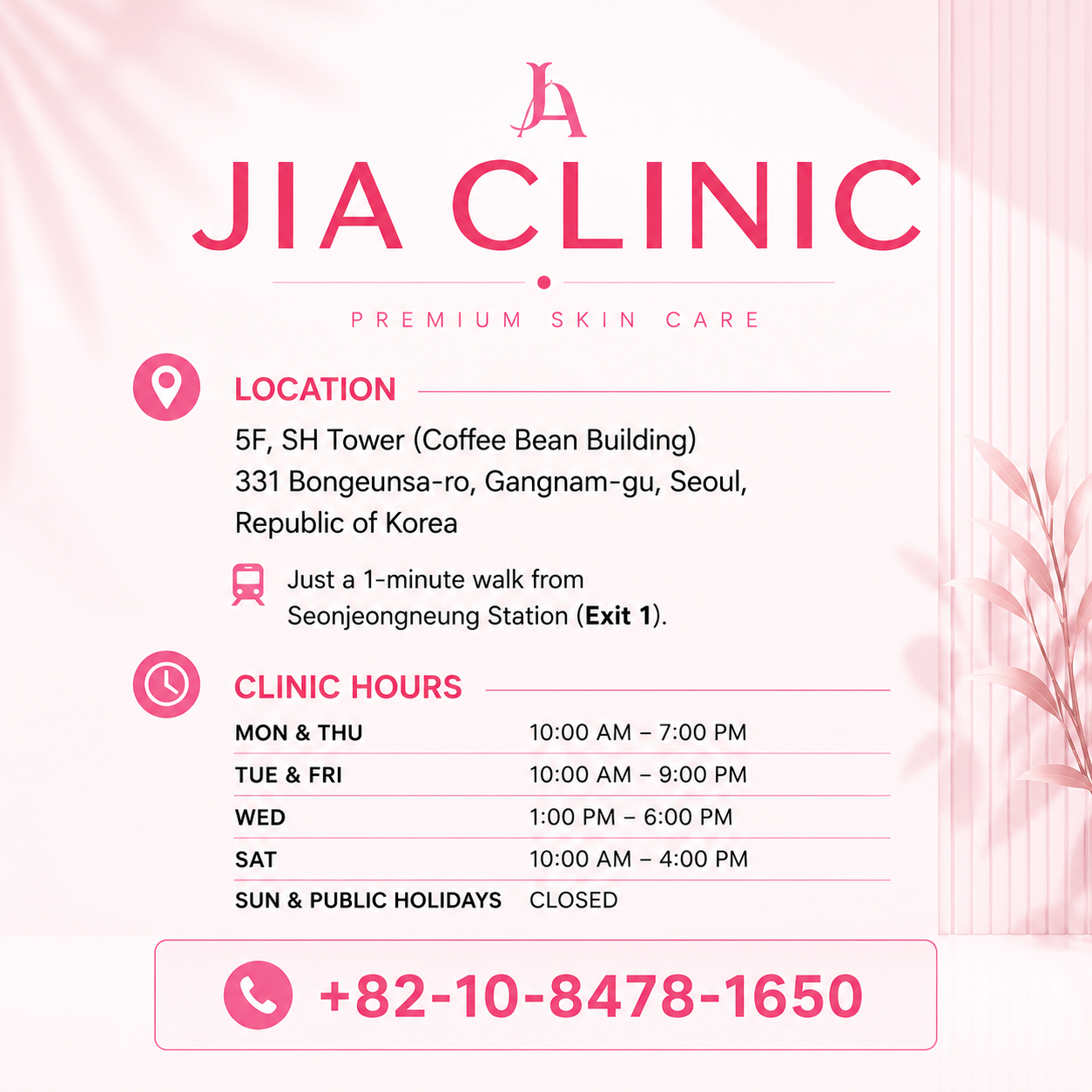
- 5F SH Tower, 331 Bongeunsa-ro, Gangnam-gu, Seoul
- Subway
- 1-min walk from Seonjeongneung Station, Exit 1
- Hours
- Mon·Thu 10–19 · Tue·Fri 10–21
Wed 13–18 · Sat 10–16 · Sun/holidays closed - +82-10-6396-5671
- Languages
- English · Korean