How to fix nasolabial folds
by lifting, not just filling
Nasolabial folds are the lines running from the sides of the nose to the corners of the mouth. They deepen mainly because the mid-face loses volume and descends, so the most natural correction supports the cheek first and softens the fold second.
Last updated

How do you fix nasolabial folds without surgery?
Nasolabial folds are best treated at their cause: mid-face volume loss and sagging. Placing hyaluronic acid filler to support the cheek and, if needed, a small amount in the fold gives immediate softening that typically lasts around 6–12 months; Sculptra or a PDO thread lift add longer-term support, and HIFU lifting tightens deeper tissue. Filling the fold alone can look heavy, so at JIA the doctor lifts first and fills conservatively.
A mid-face story, not just a line
Everyone has some nasolabial fold — it is part of a natural face. It becomes a concern when the cheek above it loses support and the fold looks deep at rest.
Mid-face volume loss
Fat pads in the cheek thin and shift down, adding weight above the fold.
Sagging tissue
Weakening ligaments and SMAS let the cheek descend toward the mouth.
Collagen decline
Thinner, less elastic skin creases more easily along the fold.
Expression & genetics
Strong smiling muscles and facial structure make folds visible earlier in some people.
Treatments we use for smile lines
Your doctor combines options based on fold depth, cheek volume and skin quality:
- Hyaluronic acid fillers – soften the fold and support structure, with immediate results
- Mid-face / cheek filler – restores lift so the fold carries less weight
- Sculptra – PLLA biostimulator that builds collagen support gradually
- PDO thread lift – lifts descended mid-face tissue
- Shurink or Ultherapy – HIFU tightening for mild to moderate sagging
- Skin boosters – improve fine lines and hydration around the fold, e.g. Rejuran
Softer smile lines, same expression

What to expect at your visit
Mid-face assessment
We study cheek volume, skin quality and how the fold moves when you smile and rest.
Balanced plan
Your doctor combines lifting, volume and collagen support, and explains costs up front.
Precise treatment
Fillers or threads are placed with numbing and fine cannulas or needles; minor swelling is common.
Settle & review
Filler and threads show change right away; collagen treatments improve over weeks. We review and fine-tune.
Who is a good candidate?
- Men and women with deepening smile lines at rest
- Mid-face volume loss or sunken cheeks
- Early sagging that also creates marionette lines or jowls
- Anyone who looks tired or heavy around the mouth
- People who prefer subtle, non-surgical rejuvenation
Good to know
- Mild swelling, tenderness or bruising can last a few days after filler or threads
- Avoid alcohol, saunas and facial massage for a few days after treatment
- Overfilled folds can look unnatural — we favor gradual, conservative correction
- Hyaluronic filler can be dissolved if needed — see dissolving fillers
- Not suitable during pregnancy, with active infection or certain autoimmune conditions — tell your doctor
Nasolabial fold questions, answered
What is the best filler for nasolabial folds?
Hyaluronic acid fillers are commonly used because they are adjustable and dissolvable. The product and placement depend on your anatomy; often a little cheek support works better than filling the fold heavily.
How long do nasolabial fold fillers last?
Typically around 6–12 months, sometimes longer, depending on the product, the area and your metabolism. Collagen stimulators such as Sculptra may give longer-lasting support.
Can HIFU reduce smile lines?
HIFU can help when the fold is driven by mild sagging, by tightening the deeper tissue. It does not replace lost volume, so it is often combined with filler or collagen boosters.
Why do my smile lines look worse after weight loss?
Losing facial fat reduces mid-face support, so the cheek sits lower and the fold deepens. Restoring volume and lifting usually helps more than filling the line itself.
Is there downtime after smile line treatment?
Usually minimal. Mild swelling or bruising may last a few days; most people return to work the next day.
How do I book a smile line consultation in Seoul?
Send us a WhatsApp message at +82-10-6396-5671 with your concern and preferred dates. We reply in English with availability and a VAT-inclusive quote.
Related treatments & guides
Plan your smile line treatment
English-speaking consultations, transparent VAT-inclusive pricing and a doctor-led plan for every patient. Message us on WhatsApp for availability and a quote.
- Address
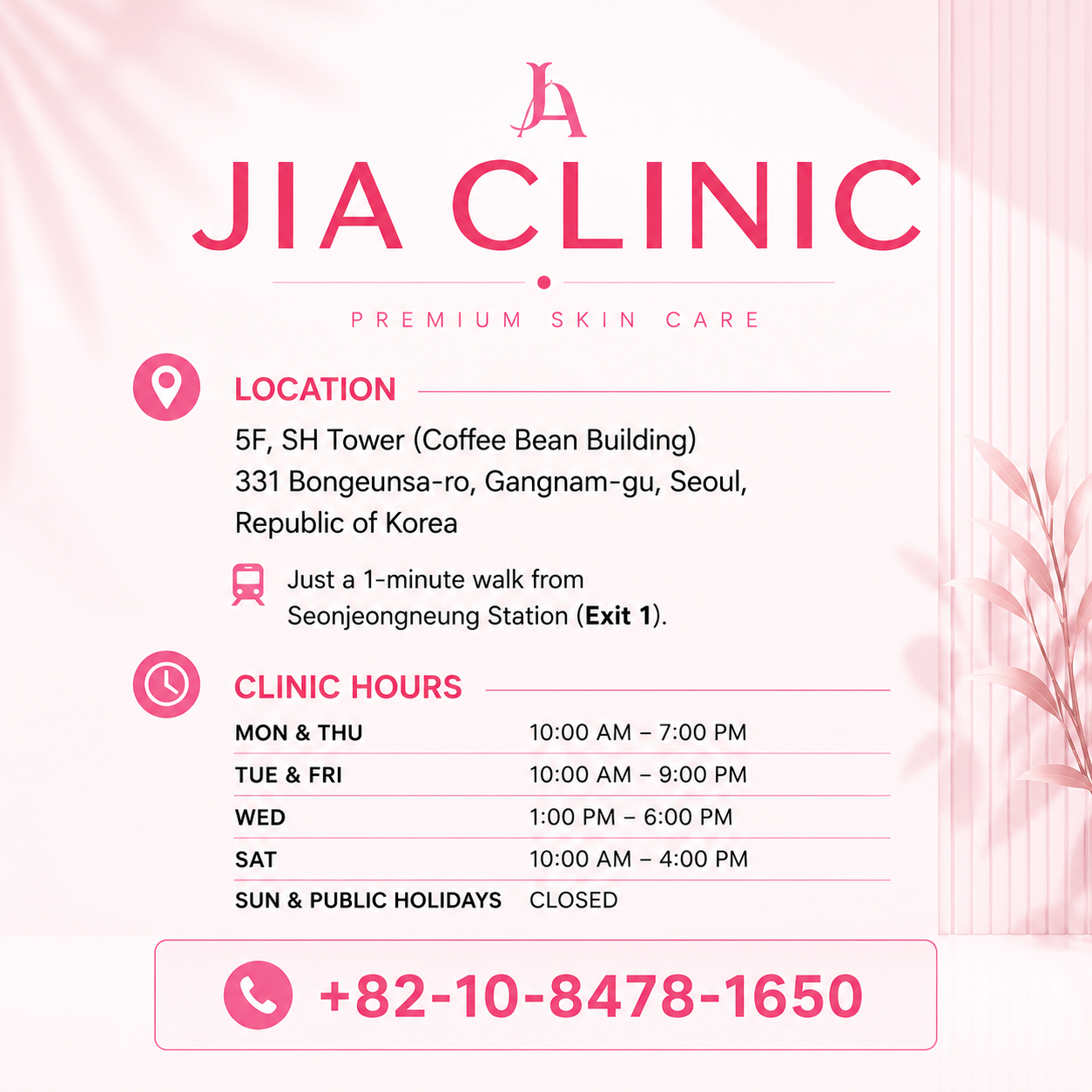
- 5F SH Tower, 331 Bongeunsa-ro, Gangnam-gu, Seoul
- Subway
- 1-min walk from Seonjeongneung Station, Exit 1
- Hours
- Mon·Thu 10–19 · Tue·Fri 10–21
Wed 13–18 · Sat 10–16 · Sun/holidays closed - +82-10-6396-5671
- Languages
- English · Korean